Word Trails NETFLIX
- 4.7
- Rating
- 1.00M
- Installs
- Free
- Price
 Analysis by App-foxy
I spent time with Word Trails NETFLIX as a quiet, pick-up-and-play word game, and its appeal became clear quickly: it gives me small brain-training puzzles that are easy to understand but still ask me to pay attention. It sits in the word-game category rather than trying to be a broad collection of unrelated activities, so the experience feels focused. I can open it for a short mental break, solve a few puzzles, and put it down without needing a long uninterrupted session.
That simple rhythm is also the main reason I would recommend it to some players and not others. If you enjoy spotting words, testing possible letter combinations, and gradually working through a sequence of challenges, this is a comfortable choice. If you want a story, a competitive leaderboard, or a highly elaborate puzzle system, the experience may feel too restrained. My review focuses on how its goals, sense of progress, difficulty, and pacing work together in everyday use.
How the first goals make the game approachable
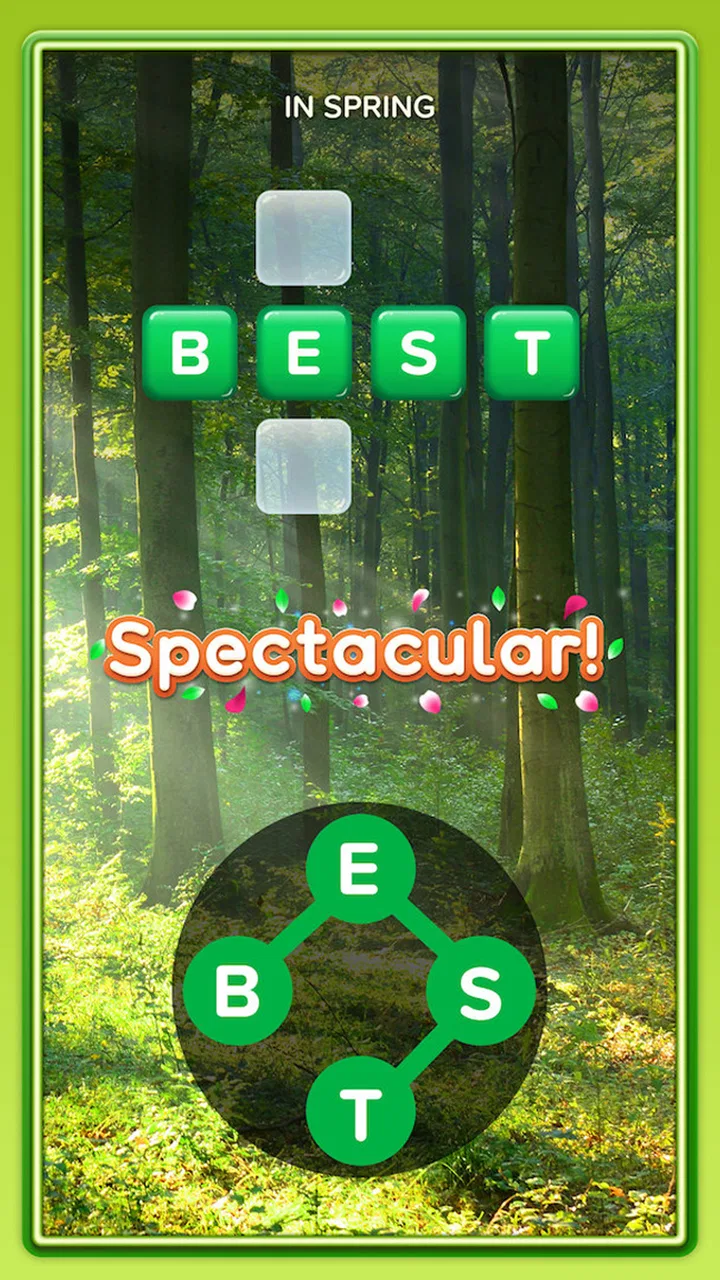
The opening appeal is that the objective is immediately readable. I do not need to learn a complicated control scheme or spend time arranging a large set of menus before reaching the actual word puzzles. That matters on a phone, where the best casual games usually respect the player’s attention. Word Trails presents itself as a game of finding and completing words, making the first few sessions feel more like a gentle warm-up than a demanding test.
You May Also Like

 Blood Strike: 2.5 Anniversary
Blood Strike’s Loadouts Turn Every Drop Into a Tactical Gamble
A close look at Blood Strike’s custom loadouts: how fast access to signature weapons reshapes its battle royale rhythm, rewards preparation, and narrows the gap between fights.

 Pandora - Music & Podcasts
Pandora’s Music Is Easy to Start, but Harder to Recover
Pandora’s strength is its low-effort path from a seed to a station. Its weak spot is how much confidence it asks you to place in connection, setup, and quiet recovery.

 8 Ball Pool
 Is Built on Rivalries, Rematches, and Routine
A close look at the rivalries, rematches, shared routines, and unanswered safety questions that turn a quick pool match into a persistent mobile community.

 Samsung Music
’s Quiet Strength Is Playing What You Already Own
Its reach comes less from spectacle than from dependable access to a personal library. That simplicity is both the app’s strongest retention engine and its ceiling.

 AccuWeather: Weather Radar
AccuWeather Review: A Quick, Clear Forecast for Everyday Decisions
For everyday plans, the best forecast is the one you can understand quickly. AccuWeather makes rain timing, radar, and local conditions easy to act on, with a few trade-offs.

 Hill Climb Racing
Why Hill Climb Racing Still Turns Crashes Into One More Run
A tiny car, a bumpy hill and one more upgrade: Hill Climb Racing keeps resurfacing because its simple chaos makes every near-miss feel personal.
More From Our News Desk



Those early goals work because they create a clear reason to continue from one puzzle to the next. Each completed word gives me a small feeling of closure, while the broader trail provides a longer-term direction. The game does not need a dramatic narrative to make progress understandable; the puzzle sequence itself supplies the structure. I found that useful when I wanted something purposeful but did not have the energy for a lengthy game.
There is a practical benefit to this design for people who are returning to word games after a break. I can begin with a puzzle without remembering a complicated build, inventory, or set of special moves. The early stage is also suitable for players who prefer independent play, because the challenge comes from my own vocabulary and observation rather than from keeping up with another person.
One tip I found helpful was to avoid committing too quickly to the first familiar word I noticed. Looking at the available letters as a group, rather than chasing the most obvious combination, made the puzzle feel less random. I also found it useful to treat a difficult moment as a prompt to change perspective: try a different starting letter, look for a shorter word, and then reassess the remaining possibilities. That approach is more effective than repeatedly tapping the same pattern.
The early goals are therefore strong at establishing a habit, but they are not designed to satisfy every kind of player. Someone who expects large, cinematic objectives may find the initial motivation modest. The pleasure here comes from solving, not from spectacle. For me, that is a positive when I want a calm game, although it means the experience depends heavily on whether word discovery itself is enjoyable.
What progress feels like during ordinary sessions
Progress in a word game needs to be visible without becoming noisy. In my experience, the trail structure gives each solved puzzle a place in a larger journey, so a short session still feels productive. I do not have to play for a long time to feel that I moved forward. Completing one small section can be enough, especially during a commute, a waiting period, or the few minutes before bed.
The most useful progress signal is not a flashy reward but the gradual reduction of unfinished work. Seeing a puzzle close out encourages me to continue, while the next challenge remains clearly connected to what I just completed. This creates a steady loop: inspect the letters, experiment, solve, and move onward. It is a straightforward loop, but it suits a game intended for repeated short visits.
I would describe the progression as gentle rather than aggressively motivational. The game does not need to push me with a constant stream of interruptions to make a completed puzzle matter. That is good for players who dislike pressure, but it can be less compelling for anyone who needs a strong external reward after every action. The satisfaction is mainly mental and comes from recognizing the answer.
A useful everyday scenario is using it as a transition between tasks. After finishing work, I can play a few puzzles before starting dinner, using the focused word search to shift attention away from a busy day. It is also a better fit than a fast action game when I want stimulation without loud effects or rapid reactions. On the other hand, I would not choose it when I need a social activity for a group, because its appeal is centered on individual concentration.
The game’s rating gives some context for its broad appeal: it holds a 4.7 average from around 24 thousand ratings. I would not treat that figure as a guarantee that every puzzle style will suit me, but it matches my impression that the basic loop is polished and easy to return to. The audience size is also substantial, with over one million installs, which makes it feel like an established casual option rather than an obscure experiment.
Where the difficulty curve helps and where it can slow down
The difficulty curve is most successful when it encourages me to use more of my vocabulary without making the first session feel like an exam. Word puzzles can become frustrating if they rely too quickly on obscure terms, unusual spellings, or a narrow interpretation of what counts as an answer. Word Trails is at its best when the challenge comes from seeing a possible word rather than from feeling that the solution depends on specialist knowledge.
As the puzzles become less immediately obvious, the game asks for patience and flexible thinking. I found that the difficulty is not only about knowing words; it is also about managing attention. A familiar word can hide another possibility, and a group of letters can look unpromising until I stop reading it in the same order. That makes the challenge feel more thoughtful than simply testing how quickly I can type.
My main caution is that word knowledge varies widely. A puzzle that feels pleasantly challenging to one player may feel arbitrary to another, particularly for people playing in a second language or for anyone with a smaller vocabulary. This is not a flaw unique to this game, but it is an important trade-off. Players who prefer puzzles with a single universally recognizable logic may find a number-based or visual puzzle game more predictable.
When I got stuck, I found it better to take a short break than to keep forcing an answer. Returning with fresh attention often made the letter arrangement easier to read. Another practical habit is to solve the words that look certain first, because the remaining letters become less distracting. I also recommend not judging the game’s difficulty from one unusually awkward puzzle; word games naturally produce uneven moments depending on the player’s vocabulary.
This is where the game differs from a traditional crossword or a large anagram app. A crossword usually gives me intersecting clues and a broader page to manage, while a pure anagram tool may focus almost entirely on generating combinations. Word Trails feels more guided and compact. It gives me a sequence of contained decisions instead of asking me to manage a whole puzzle grid. I prefer that format on a phone, though crossword fans may miss the richer clue-based reasoning.
How pacing affects the urge to keep playing
The pacing is built around manageable pieces rather than long chapters that demand commitment. I can stop after a small amount of progress and return later without feeling that I abandoned a complicated session. That makes the game particularly comfortable for casual players, older phones, and anyone who wants a word activity that fits around real life instead of taking it over.
There is a subtle retention effect in completing “just one more” puzzle. Because each challenge is compact, the next step can seem easy to justify. This is not necessarily a problem; it is the same gentle momentum that makes the game pleasant. Still, players who are trying to limit screen time should decide on a stopping point before opening it. A simple rule, such as finishing a chosen number of puzzles, is more reliable than waiting until the game itself tells me to stop.
For me, the pacing works best when I use it as a deliberate break rather than as background entertainment. I pay more attention to the letters, and the act of solving feels rewarding. If I play while distracted by television or conversation, the puzzles lose much of their value and can start to feel repetitive. The game rewards concentration, even though it does not demand the intense focus of a timed competitive title.
The retention pressure is therefore mild and mostly self-directed. The trail gives me a reason to return, but the game’s appeal does not depend on a dramatic story cliffhanger or a large social obligation. That is a meaningful advantage for me because I can enjoy it without feeling that I am falling behind other players. It is less suitable for someone who wants constant novelty, live competition, or a sense of urgency.
Its free price also lowers the barrier to trying it. The age rating is Everyone, which fits the accessible nature of the word puzzles and makes it a reasonable option for a mixed-age household. I would still choose it based on the individual player’s reading ability and tolerance for word-based frustration, rather than assuming that an Everyone rating means every child will find it equally easy.
Practical fit, device expectations, and who should choose it
Word Trails NETFLIX is a game from Netflix, Inc., and its current version is 1.26.0. It runs on Android 8.0 or newer, so anyone using an older Android device should check compatibility before planning around it. For supported phones, the low-complexity word format makes it feel naturally suited to mobile play. I can hold the device in one hand, focus on a compact puzzle, and stop without losing the sense of what I was doing.
The game is a good match for several specific situations. It works for a reader who wants to exercise vocabulary without opening a formal study app, for a commuter who prefers quiet puzzles to fast games, and for a casual player who likes measurable progress but not competitive pressure. It can also serve as a short mental reset between demanding tasks, provided I treat it as a focused activity rather than endlessly scrolling through puzzles.
I would skip it if my ideal word game is built around clues, a large board, or multiplayer interaction. A crossword app is likely better for someone who enjoys intersecting answers and clue interpretation. A competitive word game is a better choice when the main pleasure comes from beating a friend or racing a clock. A vocabulary-learning app may be more useful for someone who wants explanations, pronunciation, or structured lessons rather than puzzle solving.
Another trade-off is replay style. The satisfaction comes from moving through the available trail, so players who mainly want an endless sandbox may find the format less flexible than a dedicated anagram generator. Conversely, I prefer having a guided route because it removes the question of what to do next. The right choice depends on whether I value direction or unlimited experimentation.
My progression verdict after weighing the full loop
The progression succeeds because its goals are understandable, its progress is easy to feel, and its difficulty asks for attention without turning every session into a test of endurance. The trail format gives the game a destination, while the individual puzzles keep the commitment small. I especially liked that I could make meaningful progress in a short visit instead of needing to reserve a large block of time.
Its limitations are equally clear. The experience can feel restrained beside word games with elaborate stories, social systems, or broader puzzle variety. Difficulty is also personal: vocabulary, language background, and patience will shape the experience more than any general rating can. The game is not a universal replacement for crosswords, anagram tools, or educational vocabulary software.
Still, I think the balance is convincing. The free entry point, Everyone age rating, focused word format, and calm pacing make it easy to recommend to someone who wants a phone game that exercises the mind without demanding constant attention. The strongest reason to try it is not that it promises endless complexity, but that it makes small acts of word recognition feel organized and worthwhile.
My final recommendation is simple: choose it if you enjoy solving one contained word challenge after another and want a gentle sense of forward movement. Start with short sessions, use the certain answers to reveal the harder ones, and take a break when a puzzle begins to feel forced. The best part of Word Trails is its steady, low-pressure progression; the main question is whether that focused simplicity matches the kind of challenge you want.
FAQs for Word Trails NETFLIX
01What is Word Trails NETFLIX and how does it work?
Word Trails NETFLIX is a word puzzle game available exclusively to Netflix subscribers. Players are tasked with finding hidden words in a grid of letters, connecting them in a trail. The game features various levels of difficulty, offering both casual and seasoned players a challenging experience. As you progress, the puzzles become more intricate, requiring sharper focus and strategy.
02Do I need a Netflix subscription to play Word Trails NETFLIX?
Yes, Word Trails NETFLIX is exclusive to Netflix subscribers. You need an active Netflix account to download and play the game on your Android or iOS device. This integration allows Netflix to offer unique gaming experiences to its subscribers, enhancing the overall value of its service.
03Is Word Trails NETFLIX suitable for all age groups?
Word Trails NETFLIX is designed to be family-friendly and suitable for players of all ages. The game’s intuitive design and varying levels of difficulty make it accessible to children, teenagers, and adults alike. However, younger players might require assistance with more challenging puzzles as they advance through the game.
04Are there any in-app purchases or ads in Word Trails NETFLIX?
No, Word Trails NETFLIX does not include in-app purchases or ads. As a benefit of being a Netflix subscriber, players enjoy an uninterrupted gaming experience without the need to make additional purchases. This ensures that the gameplay remains focused on solving puzzles and progressing through levels.
05Can I play Word Trails NETFLIX offline?
Yes, Word Trails NETFLIX can be played offline once it has been downloaded onto your device. This is particularly beneficial for users who want to enjoy the game during travel or in areas with limited internet connectivity. However, you will need an internet connection for the initial download and any subsequent updates.
Pros
- Engaging puzzles keep users challenged.
- No ads interrupting gameplay experience.
- Smooth and intuitive user interface.
- Offline mode available for playing anytime.
- Exclusive content for Netflix subscribers.
Cons
- Requires Netflix subscription to access.
- Limited language support for puzzles.
- No option for multiplayer gameplay.
- May consume significant device battery.
- Updates may be infrequent.

Word Trails NETFLIX
Gallery